- Published on
A sofa is usually the biggest piece of furniture in the house, and the one that is hardest to return. A sofa that is too deep turns the living room into a lounge nobody can sit upright in. One that is too small leaves the room feeling unfinished no matter how nice the fabric is. And a sectional aimed the wrong way can block the walkway you use fifty times a day. The fix is not finding a different dream sofa. It is choosing in the right order: room first, then seats, then comfort, then fabric and style.
Here is the order I use, and the numbers behind each step.
Start with the room, not the sofa
Before you look at a single sofa, write down three measurements:
- The wall it will sit on. A sofa looks right at about two-thirds the length of its wall. On a 12-foot wall, that is roughly an 8-foot sofa. A sectional can run longer because it turns the corner, but it should never crowd doorways or windows.
- The walkways. Keep 30 to 36 inches clear on any path people walk through. Between the sofa and the coffee table, 16 to 18 inches is the working gap: close enough to set down a glass, wide enough to walk through. The coffee table size guide covers that pairing in detail.
- The delivery path. Measure every doorway, hallway, stair turn and elevator between the truck and the room. Compare them to the sofa's diagonal depth (its height versus depth when tilted). More sofas get returned over a stair landing than over style.
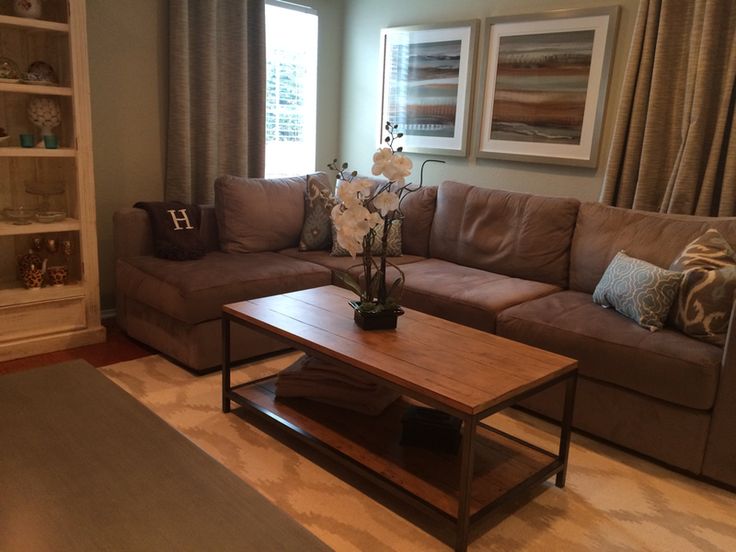
A sectional sized to the wall turns one long wall into seating for the whole room. Image via Jill Seidner Interior Design on Pinterest (originally published by Dallas Stribley). View the pin
Sofa or sectional: count the seats you actually use
Count the people who sit down in the room on a normal weeknight, not the crowd you host twice a year. Then match the piece to the count:
- One or two people: a standard three-seat sofa (about 84 inches) is plenty, and it leaves wall space for a chair or a lamp table.
- Three to four: a sofa plus one accent chair angled toward it beats one giant sofa. The chair adds a seat without adding bulk.
- Five or more, or a TV room: a sectional earns its footprint. Check which side the chaise belongs on before you order: stand facing the sofa, and choose right-arm or left-arm facing so the chaise does not block your main walkway.
If you rearrange furniture often or expect to move, two smaller pieces outlast one huge one. A sectional only fits the rooms it fits.
An L-shaped sectional with a matching ottoman seats a whole family in one corner and leaves the rest of the room open. Image via Jill Seidner Interior Design on Pinterest (originally from GEORGE NIJLAND on Behance). View the pin
Depth and height decide how it sits
Comfort is mostly two numbers:
- Seat depth: 20 to 22 inches sits you upright, which suits conversation and older knees. 23 to 25 inches is a lounging depth made for curling up, and shorter people will perch on the edge of it. Over 25 inches is a daybed in disguise.
- Seat height: 17 to 18 inches works for most people. Lower looks modern and makes standing up harder; higher suits anyone with stiff hips.
The quick sit test: feet flat on the floor, knees near a right angle, lower back touching the back cushion without a pillow propped behind you. Back height matters too: a low 30-inch back looks tailored but gives no head support for movie night, while 36 inches and up does.
A deep curved seat like this Pierre Rugiano sofa is built for lounging, not perching. Image via Jill Seidner Interior Design on Pinterest (originally from Bernhardt Vella). View the pin
Shape sets the style
Once the numbers work, shape does the decorating:
Straight track arms read tailored and modern, and their narrow arms give you more seat per inch of width, which matters in a small room.
Rolled arms and turned legs read traditional. Plan on the arms eating 6 to 8 inches of the overall width on each side.
Curved sofas soften a room full of right angles and work beautifully floated off the wall, where the curve can be seen. They need more floor around them, so they suit bigger rooms.
Legs change the visual weight too. An exposed leg lets light under the piece and keeps a small room feeling open; a skirt or a plinth base grounds a large room.
A curved sofa softens a minimal room and looks best floated where the curve shows. Image via Jill Seidner Interior Design on Pinterest (originally from Benoit Viaene). View the pin
Fabric is the working surface
Pick the fabric for the life the room actually lives:
- Kids and pets: performance fabrics and tight weaves resist stains and claws, and leather wipes clean (scratches buff into the patina on most leathers). Skip loose weaves and boucle, which snag.
- Washable wins: a slipcovered sofa forgives almost everything, because the cover comes off and goes in the wash.
- Color and pattern: a mid-tone or a subtle pattern hides wear between cleanings. A pale solid shows every mark, so save it for low-traffic rooms.
- Statement fabrics: velvet reads rich and wears better than its reputation, but it shows pressure marks; brush it with the nap.
Order swatches and look at them in the room's own light, morning and evening, before committing.
A bold velvet turns the sofa into the statement of the room; keep the rest quiet around it. Image via Jill Seidner Interior Design on Pinterest (originally from Humbert & Poyet). View the pin
Shop my picks
These pieces are from my ShopMy living room shelf: the finishing layer around the sofa once the size is right. These are affiliate links; I may earn a commission if you make a purchase, at no extra cost to you.
Joss & Main Bobbi Upholstered Accent Chair - the extra seat that keeps a giant sofa from being the only answer. Angle it toward the sofa, not the TV.
Lulu and Georgia Meazza Round Side Table - lands right at the arm of the sofa, which is exactly where a side table belongs.
Birch Lane Momsen Drum Ceramic Table Lamp - warm light at sitting height, small enough for the side table, and it lets the overhead stay off.
Parachute Organic Rib Knit Throw - the throw that lives folded over the arm and still looks good at the end of the week.
Browse the rest of my designer-tested picks on my ShopMy shop.
Measure once, buy once
The order never changes: the wall and walkways set the maximum size, the weeknight headcount sets sofa versus sectional, seat depth and height set the comfort, and fabric sets how long it looks new. Get those four right and almost any style you love will work in the room. For placing the sofa in the layout itself, my living room layout post walks through the arrangements, and the rug size guide gets the rug under it right.
If you would rather have the whole room planned for you, my Complete Room Design for $397 gives you two layout options, furniture and lighting picks, paint colors and a linked shopping list, all sized to your actual room. You can also see every service on my online design page.