A living room can have beautiful furniture and still feel disconnected. Often, the problem is underfoot: a small rug floating in the middle of a large seating area, with the sofa and chairs sitting outside its edges. Choosing a rug that connects the seating can make the whole arrangement feel more settled.
A larger rug can connect the sofa and chairs without replacing the furniture. These size and placement checks can help you choose between an 8x10, a 9x12 and the other options for your seating area.
Jill's rug-size guide. Select the image to view the original pin on Pinterest.
The rug rules in one look
Start with three checks: choose a rug that fits the seating group, put the front legs of the sofa and chairs on it, and leave an even border of bare floor. Measure your furniture arrangement before deciding whether an 8x10 or a larger rug is right.
Buy bigger than you think
The default rug people bring home is too small. A 5x7 or 6x9 under a full seating group makes the furniture look like it is drifting. For most living rooms the right answer is an 8x10, and for large rooms or sectionals a 9x12. Good Housekeeping's rug size guide lands in the same place. The rug should also be wide enough to run 6 to 12 inches past the ends of the sofa on each side.
The budget worry is real, because the price jumps with size. One practical option: a simple jute or flatweave in the right size beats a beautiful wool rug in the wrong size, every time. You can always upgrade the rug later. You cannot stretch a small one.
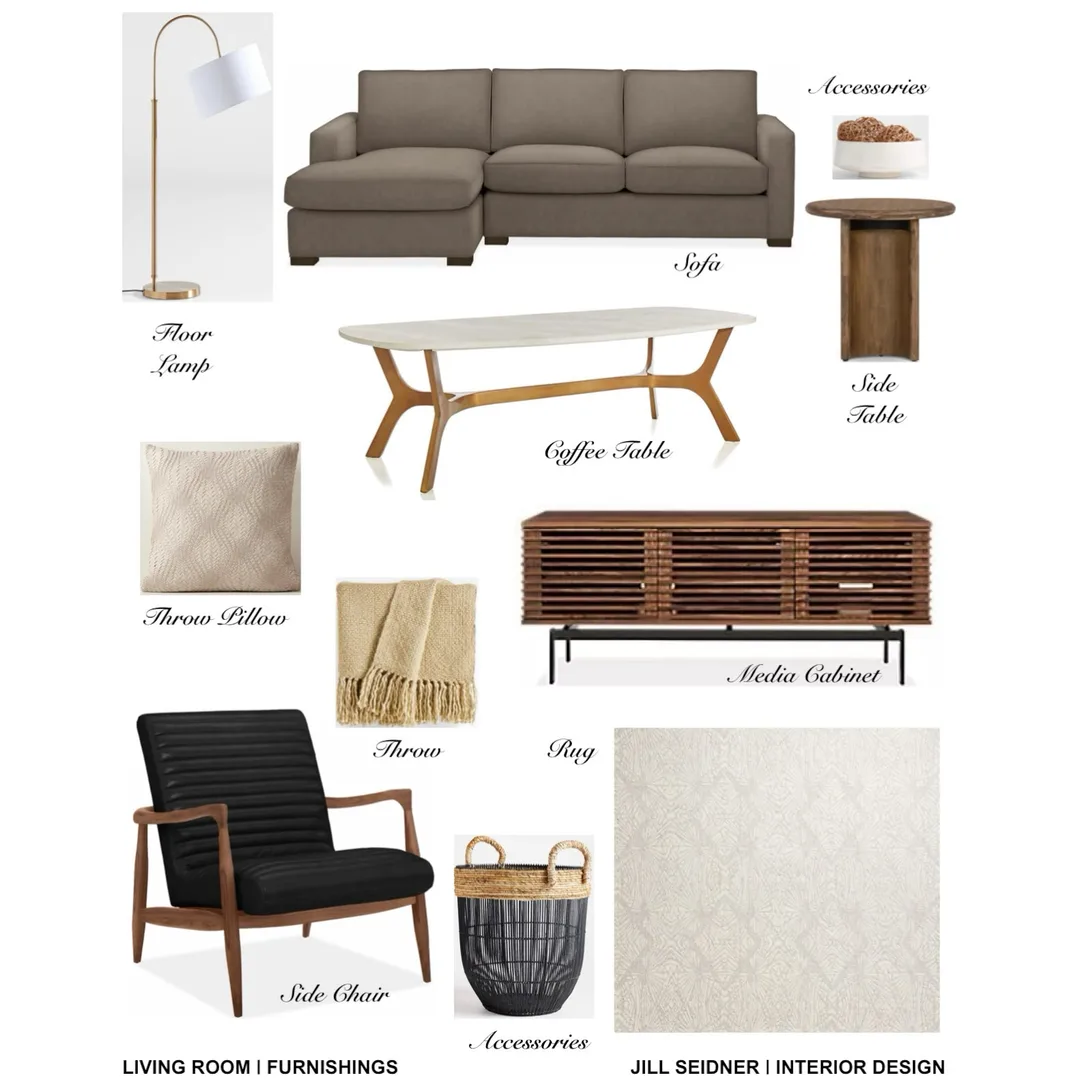
A furnishing board pairs a neutral rug with the seating group. View the pin
Front legs on, back legs off
Here is the placement that works in nine out of ten living rooms: the front legs of the sofa and every chair sit on the rug, and the back legs stay on the bare floor. That one connection is what makes separate pieces read as a single conversation area. Martha Stewart's placement guide calls it the same way.
Two variations worth knowing. In a large room with a generous rug, all four legs of everything can sit on the rug, which feels the most finished. In a very small room, a smaller rug can sit in front of the sofa with just the coffee table on it, but only when the seating hugs the walls. When in doubt, go back to front legs on.
Check the rug placement alongside the distances between seats. View the pin
Leave an even border of bare floor
A rug should never act like wall-to-wall carpet. Leave a consistent band of exposed floor between the rug edge and the walls: about 12 to 18 inches in an average room, up to 24 in a large one, and 8 to 12 in a small one. Crate and Barrel's rug buying guide uses the same range. And center the rug on the seating area, not the room, when the room is an odd shape.
The other rooms, quickly
Dining room: the rug should extend at least 24 inches past the table on every side, so chairs stay on the rug when they are pulled out. Bedroom: the rug should reach 18 to 24 inches past the sides and foot of the bed. This room-by-room size chart covers the spaces in between. Wherever a rug goes, put a felt pad under it. A pad keeps the rug flat, protects the floor, and makes a thin rug feel twice as thick, and the experts at Real Simple agree. If you are also reworking the furniture plan itself, my living room layout post walks through the arrangement side.
Different room shapes call for different seating arrangements. View the pin
Shop my picks
Start with these rugs from my ShopMy collection, then choose the size that fits your furniture plan. These are affiliate links; I may earn a commission if you make a purchase.
The whole approach in one paragraph: measure the seating area, not the room. Choose the smallest rug that lets every seat put its front legs on it, which is usually an 8x10 and never a 5x7. Keep 12 to 18 inches of bare floor between the rug and the walls. Then tape the outline on the floor with painter's tape and live with it for a day. If the tape line looks right, the rug will too.
The final check: look at furniture grouping and the room as a whole. View the pin
Rug size FAQ
Is an 8x10 rug big enough for a living room?
For most living rooms, yes. An 8x10 fits a standard sofa and two chairs with the front legs on. Move up to a 9x12 when the room is large, the sofa is a sectional, or the seating floats away from the walls.
Should a rug go under the sofa?
The front legs, always. All four legs when the rug is large enough. What does not work in a main seating area is the rug sitting fully in front of the sofa touching nothing, unless the room is very small.
How much bigger should a rug be than a dining table?
At least 24 inches on every side, measured with the chairs pushed in. That is the distance a chair travels when someone sits down, and it keeps the back legs from catching the rug edge.
Want help with your room?
Want a designer to plan your layout, rug and finishes with you? That is exactly what my online design services are built for.
Prefer to plan it yourself? Start with my ready-to-use room layout templates.
Design Services Looking for interior design help? Offering design consultations and online design for anyone, anywhere. Happy to help with any of your design needs!
About
Jill Seidner is a Los Angeles based Interior Designer specializing in commercial & residential interior design, design consultations, & online design services. She is active in the design community & also the Los Angeles blogger for the Material Girls Blog. For media kit and blog sponsorship info, click here.