As an Amazon Associate I earn from qualifying purchases. Some links in this post are affiliate links, at no extra cost to you.
Lighting is worth getting right for more than looks. According to the U.S. Department of Energy, lighting accounts for about 15% of an average home's electricity use (Consumer Guide to Energy-Efficient Lighting, U.S. Department of Energy). A layered plan lets you use only the light you need, when you need it.
Kitchen Lighting Ideas Start With Three Layers
Think of your kitchen in three jobs. Ambient light is the general light you walk into. Task light is focused light for prep, cooking and cleanup. Accent light is the softer, decorative layer that shows off a shelf, a piece of art or a beautiful backsplash. When one fixture tries to do all three jobs, it does none of them well. When each layer has its own switch, the same kitchen can feel bright at 7 AM and cozy at 9 PM.
Layer 1: Ambient Light and Your Recessed Lighting Layout
Ambient light is usually recessed lights, a flush mount or a pair of semi-flush fixtures. The most common mistake I see with a recessed lighting layout is a neat grid centered in the room. It looks tidy on a plan, but it puts the light behind you when you're standing at the counter, so you work in your own shadow. Instead, place the recessed lights closer to the front edge of the counters and cabinets, where you actually stand.
If your kitchen has one center fixture and you aren't ready to open the ceiling, don't worry. You can add the other two layers without touching the ambient light at all, and the room will still feel completely different. My post on ceiling lighting solutions walks through more options for rooms with limited ceiling wiring.
Layer 2: Task Lighting Under the Cabinets
If I could add only one thing to most kitchens, it would be under cabinet lighting. It puts light right on the counter, exactly where you're slicing, measuring and reading. The Department of Energy's lighting guidance makes the same point for efficiency: where possible, task lamps and under-cabinet work surface lighting should be used in combination with lower ambient (overhead) light levels (Purchasing Energy-Efficient Light Fixtures, U.S. Department of Energy).
Mount the strips toward the front of the cabinet's underside so the light falls on the counter instead of glaring off the backsplash. For a simple upgrade, a linkable LED bar like this 18-inch under cabinet light with three color temperatures can be plugged in or hardwired, so it works for renters and owners alike.
Pendant Lights Over the Island
Pendant lights over the island do double duty: they're task light for the island counter and they're the kitchen's jewelry. Choose the size based on the island, not the catalog photo. A long island can take two or three pendants, while a small round island often looks best with one larger fixture. Hang them so they light the counter without blocking your view across the room, and keep the finish in conversation with your hardware and faucet.
This is also where a kitchen gets its personality. Woven shades soften a modern kitchen, glass keeps a small kitchen feeling open, and a sculptural fixture can carry the whole design.
Layer 3: Accent Lighting for Warmth
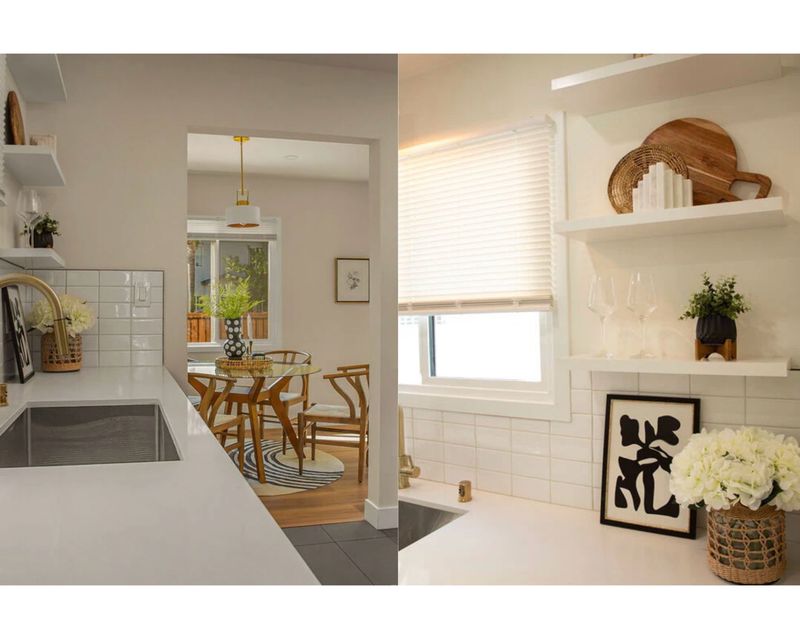
Accent light is the layer most kitchens skip, and it's the one that makes a kitchen feel finished. A picture light over a piece of art, a small lamp on the counter, lights inside glass-front cabinets or a strip under open shelving all create pools of soft light. In the evening, turn off the overhead lights and leave the accents on. The kitchen instantly feels like part of the living space.
Bulbs, Color and Dimmers
The fixtures get the attention, but the bulbs decide how the room feels. LEDs use up to 90% less energy and last up to 25 times longer than incandescent bulbs, and most LEDs are also dimmable (U.S. Department of Energy). Pay attention to color, too. ENERGY STAR's bulb checklist measures light color on the Kelvin scale and describes warm or soft white as the standard color of incandescent bulbs, while cool or neutral white is good for kitchens and work spaces (Light Bulb Purchasing Checklist, ENERGY STAR).
My rule: keep the color the same within each layer, so you don't end up with one yellow pendant next to one blue one. Then put every layer on a dimmer. A dimmer made for LEDs, like the Lutron Diva LED+ dimmer, lets the same pendants go from bright prep light to soft dinner light.
Putting Your Kitchen Lighting Ideas Together
Before you buy a single fixture, sketch your kitchen and mark three things: where you prep, where you gather and what you'd like to highlight. Give each one its own light and its own switch. If your kitchen needs more than new lighting, my post on kitchen refresh ideas covers five updates that make an older kitchen feel new without a remodel, and how to create a light-colored living room shows how lighting and color work together in an open plan.
Kitchen Lighting Ideas FAQ
What are the three layers of kitchen lighting?
Ambient light for the whole room, task light for the counters, island and sink, and accent light for warmth and decoration. Each layer works best on its own switch.
Is under cabinet lighting worth it?
Yes. It's one of the most useful kitchen lighting upgrades because it lights the counter directly, and plug-in versions make it possible without an electrician.
What color light is best for a kitchen?
Pick one color temperature per layer and stay consistent. ENERGY STAR describes cool or neutral white as good for kitchens and work spaces; many people like a warmer white for pendants and accent lights.