- Published on
Source
When you’re designing your home, you may be wondering what matters the most. After all, when you first get started, it can seem like a lot to take on. It doesn’t matter if you’re looking to update your current home or you have just bought a new property, getting the design right is key. While you may feel like you have a lot of decisions to make, it will always be important for you to focus on the right things. In this blog post, we’re going to take a look at some of the design details that go a long way.
Wall Art
First of all, you may find that looking at bringing in some fun wall art can really make a difference to any space. When a room feels unfinished, it may the the case that you need to focus on what pieces could complement the room and set it off. It doesn’t have to be anything big or expensive, but simple pieces can help a space to have character and feel complete. It’s also a subtle way to bring color into a room too.
Window Dressings
The next area of the room to turn your attention to is the window area. Window dressings are important for two reasons. One, they control the light and add privacy, and two, they can create warmth and coziness in a space too. For this, you can take a look at custom blinds that will work with the different window spaces you have in the home. You can also add in drapes that will create a luxury finish and add color
Features
Then we have the idea of the different features that can become a main part of the home. Creating focal points can be a fun part of the design process. Whether it’s a feature fireplace, a statement staircase, or a beautiful bar area, these areas can not only become an area of interest in your home, but also support your lifestyle. They can also be some of your most-loved areas around the property. So start to think of the different features that would feel fun to you.
Hardware
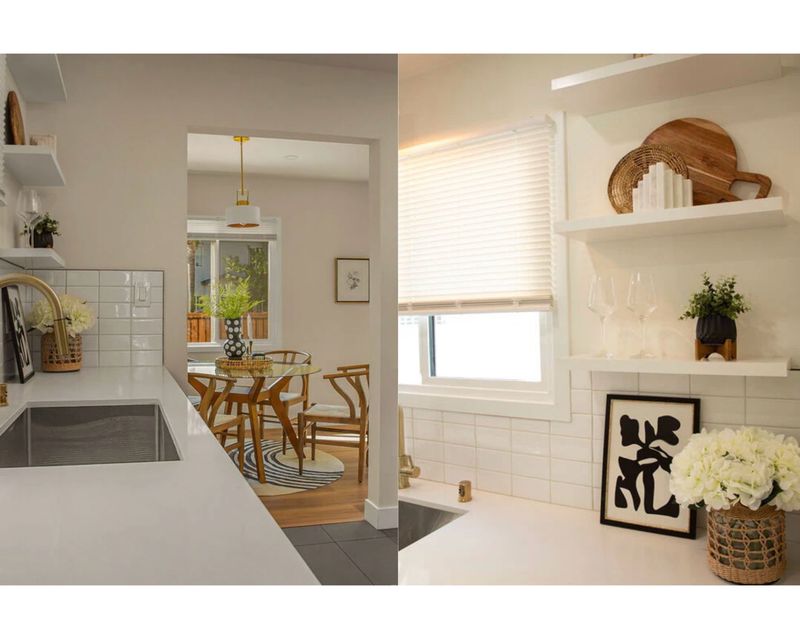
Some of the design details that carry a lot of weight are your chosen hardware additions around the house. From the right towel rail in the powder room to the perfect tap for the kitchen, these small touches often set a space off perfectly. Remember, most of the time, the overall impact of design is in the details. So make them count!
Textures
Finally, we then have the idea of bringing in different textures. When it comes to adding something new and fresh to a space, concentrating on the different textures you have in place can really make a huge difference. Rather than sticking to just one texture or adding in too many that look clunky, focusing on matching your textures can create the right effect. Whether it’s elevated and luxe or charming and comforting, using different fabrics, textiles, and things like flooring choices can really pull your overall interior design choices together.
- Published on

Available here: https://jsinteriordesign.gumroad.com/l/fformna
🏡 Apartment Set Up Workbook
A Complete Step-by-Step Design System for Your New Apartment
Turn your empty apartment into a cohesive, designer-feeling home — without overwhelm or expensive mistakes.
Moving into a new apartment is exciting… but it can also feel chaotic.
What should you buy first?
What size rug fits?
How do you avoid wasting money on the wrong sofa?
Where do you even start?
This system gives you the exact step-by-step structure I use with clients — simplified into a clean, easy-to-follow workbook.
✨ What You Get
📘 30+ Page Step-by-Step Design Book
Learn how to:
A clean, structured planning system with:
✔ Entry Guide
✔ Living Room Guide
✔ Dining Guide
✔ Bedroom Guide
✔ Home Office Guide
✔ Outdoor Patio Guide
✔ Closet + Organization Planning
✔ Budget Trackers
✔ Purchase Checklists
✔ Room Measurement Worksheets
✔ Rug Size Calculators
✔ Progress Dashboard
📊 Google Sheets Companion (Interactive)
Auto-calculates:
💡 This Is Perfect For You If:
• You’re moving into your first apartment
• You want a pulled-together, cohesive space
• You don’t want to hire a full-service designer
• You feel overwhelmed by where to start
• You want to shop intentionally and avoid regret purchases
🎯 The Transformation
Instead of:
❌ Random purchases
❌ Wrong rug sizes
❌ Layout frustration
❌ Overspending
❌ Rooms that feel unfinished
You’ll have:
✔ A clear plan
✔ A budget system
✔ Structured room checklists
✔ Designer layout guidance
✔ Confidence in every decision
Design is planning first. Buying second.
📦 What’s Included
Complete Book + Workbook Bundle — $27
One small investment to avoid hundreds (or thousands) in design mistakes.
🔒 Instant Access
Download immediately after purchase.
Works on desktop, tablet, or print.
👩🎨 Created by Jill Seidner
www.JillSeidnerInteriorDesign.com
Interior Designer | Your Design Guide
Helping you create a home that feels intentional, balanced, and beautifully put together — without overwhelm.
A Complete Step-by-Step Design System for Your New Apartment
Turn your empty apartment into a cohesive, designer-feeling home — without overwhelm or expensive mistakes.
Moving into a new apartment is exciting… but it can also feel chaotic.
What should you buy first?
What size rug fits?
How do you avoid wasting money on the wrong sofa?
Where do you even start?
This system gives you the exact step-by-step structure I use with clients — simplified into a clean, easy-to-follow workbook.
✨ What You Get
📘 30+ Page Step-by-Step Design Book
Learn how to:
- Measure correctly
- Create a functional layout
- Choose correct rug sizes
- Apply designer spacing rules
- Define your color palette
- Plan before you shop
- Avoid common (expensive) mistakes
- Style your home with confidence
A clean, structured planning system with:
✔ Entry Guide
✔ Living Room Guide
✔ Dining Guide
✔ Bedroom Guide
✔ Home Office Guide
✔ Outdoor Patio Guide
✔ Closet + Organization Planning
✔ Budget Trackers
✔ Purchase Checklists
✔ Room Measurement Worksheets
✔ Rug Size Calculators
✔ Progress Dashboard
📊 Google Sheets Companion (Interactive)
Auto-calculates:
- Room square footage
- Budget totals
- Room-by-room spending
- Completion percentages
- Overall apartment progress dashboard
💡 This Is Perfect For You If:
• You’re moving into your first apartment
• You want a pulled-together, cohesive space
• You don’t want to hire a full-service designer
• You feel overwhelmed by where to start
• You want to shop intentionally and avoid regret purchases
🎯 The Transformation
Instead of:
❌ Random purchases
❌ Wrong rug sizes
❌ Layout frustration
❌ Overspending
❌ Rooms that feel unfinished
You’ll have:
✔ A clear plan
✔ A budget system
✔ Structured room checklists
✔ Designer layout guidance
✔ Confidence in every decision
Design is planning first. Buying second.
📦 What’s Included
- 30+ Page Design Guide (PDF)
- 40+ Page Structured Workbook (Printable + Fillable)
- Google Sheets Interactive Budget System
- Lifetime access
- Instant download
Complete Book + Workbook Bundle — $27
One small investment to avoid hundreds (or thousands) in design mistakes.
🔒 Instant Access
Download immediately after purchase.
Works on desktop, tablet, or print.
👩🎨 Created by Jill Seidner
www.JillSeidnerInteriorDesign.com
Interior Designer | Your Design Guide
Helping you create a home that feels intentional, balanced, and beautifully put together — without overwhelm.

- Published on

Designing your first apartment isn’t about buying everything at once.
It’s about doing it in the right order.
Here’s the framework I give clients:
1. Measure everything.
Walls. Windows. Door swings. Ceiling height. This prevents 90% of mistakes.
2. Plan your layout first.
Where does conversation happen? Where do you eat? Work? Don’t let walls dictate — define zones intentionally.
3. Set a realistic budget.
Invest in the pieces you sit or sleep on daily. Save on trend items.
4. Define your style direction.
Pick a lane before you shop. Warm modern? Soft coastal? Minimal? Clarity prevents regret.
5. Shop in layers.
Foundation pieces → functional layers → personality.
That’s it. No overwhelm. No random purchases.
If you want this broken down room-by-room with checklists, measurements, and planning pages, my full apartment guide walks you through it step-by-step.
You can find it here:
https://jsinteriordesign.gumroad.com/l/fformna
Start with a plan. The rest gets easier.
- Published on
By Andrea Erickson

“I really love how noisy my office gets during rush hour…” Said no one ever.
While clamorous interior environments have never been desirable, they have really become “public enemy #1” in recent years amid the rise in multi-use buildings and the demand for pristine technological connectivity.
Given this framework, keep reading as we explore how soundproofing is a new luxury standard in the design of home and office spaces.
Benefits of Quieter Spaces
Noisy spaces are a nuisance, no doubt about it.
However, a soundproof home office is more than just a “nice-to-have.” Tranquil home and work environments have diverse benefits such as:
Tools and Techniques for Soundproofing a Home or Office
While clamorous interior environments have never been desirable, they have really become “public enemy #1” in recent years amid the rise in multi-use buildings and the demand for pristine technological connectivity.
Given this framework, keep reading as we explore how soundproofing is a new luxury standard in the design of home and office spaces.
Benefits of Quieter Spaces
Noisy spaces are a nuisance, no doubt about it.
However, a soundproof home office is more than just a “nice-to-have.” Tranquil home and work environments have diverse benefits such as:
- Improved focus - limiting distracting noise is especially crucial in the era of remote work, digital content creation, online schooling, and multi-generational living.
- Lessen anxiety - some people have stress reactions to exposure to loud noises.
- Physiological benefits - quiet spaces limit the threat of tinnitus or noise-related headaches.
- Better relationships - clear, quality communication is central to maintaining strong personal and work bonds.
Tools and Techniques for Soundproofing a Home or Office
Interior soundproofing is decidedly more polished than stapling egg cartons to the walls (if you were into 90’s grunge, you already know). Fortunately. Let’s take a look at some of the most impactful items in the designer’s arsenal.
Acoustic Glazing
Windows are one of the keys to quiet spaces. Howling winds and bustling exteriors can potentially pollute your interior. Degradation in the window-to-wall transition can create a point of ingress for noise transfer.
Acoustic glazing uses laminated glass. It has specialized layers that dampen sound vibrations. This significantly limits the transmission of exterior noise into interior spaces. Multiple panes with varying thicknesses is another deft strategy. This disrupts the frequency of various sound waves, rather than just a single frequency.
Any conversation of how to soundproof windows would not be complete without fortifying the window-to-wall transition. Choose a quality silicone-based sealant to close off any gaps. Add trim for an additional layer of sound defense. Explore innovative window seal inserts that attach magnetically to the trim or directly in between the jambs.
Insulated Drapery
Any type of window treatment (drapes, blinds, etc.) will have some degree of soundproofing utility.
Thick fabrics. Thermal or mass-loaded backings. They help absorb and dampen sound vibrations. They reduce echo within the room. All while limiting transmission of street or neighborhood noise.
Wall Assemblies
Advanced wall assemblies can be refined while still keeping soundproofing in mind.
Staggered or double-stud framing. Resilient channels. “Quiet” insulation (recycled denim, mineral wool). Multiple layers of drywall.
The increased mass and decoupling techniques used in these innovative wall assemblies can significantly reduce sound transmission between spaces. They disrupt the path of airborne and impact noise to keep sound vibration from traveling between structural elements of the building.
Acoustic Panels

Acoustic panels are as stylish as they are sleek.
They are commonly made of a fiberglass or acoustic foam core (1- or 2-inch thickness) wrapped in a decorative fabric for aesthetic appeal. They attach to the wall similar to a portrait. The best panels can achieve a NRC approaching 1 with as little as 15-25% wall coverage. The ultimate in low-profile soundproofing.
With the open concept going nowhere anytime soon in the world of interior design, acoustic panels are one of the best soundproofing tools for keeping interior noise local to its origin.
Natural Textiles
Natural textiles soften hard surfaces. They make it difficult for sound waves to bounce off of walls and floors.
Wool. Cotton. Linen. These are a few textiles with dense fibers that are highly effective at trapping sound waves.
Rugs, curtains, upholstery, and wall hangings maximize the acoustic benefits of these textiles while yielding a warm, luxurious aesthetic to elevate the home or office.
Soundproofing as Part of Human-Centered Design

Human-centered design is an emerging framework in the interior design world.
At every stage of the process, the designer asks:
A New Standard of Luxury: Curate Quiet Interiors Today
Quiet interiors are more than convenient. An added bonus. A perk. They are a new standard of luxury in an increasingly connected and multi-use world. For more of the latest trends in high-end interiors, explore the content at Jill Seidner Interior Design for ideas and inspiration today!
At every stage of the process, the designer asks:
- How will this space be used and experienced by people as part of their daily routines?
- How will it contribute positively to their physical and psychological needs?
A New Standard of Luxury: Curate Quiet Interiors Today
Quiet interiors are more than convenient. An added bonus. A perk. They are a new standard of luxury in an increasingly connected and multi-use world. For more of the latest trends in high-end interiors, explore the content at Jill Seidner Interior Design for ideas and inspiration today!
Author Bio

Andrea Erickson is a freelance writer who loves sharing her knowledge and expertise in renovation and Interior Design. She lives in her hometown of Austin, Texas where she enjoys spending time with her husband and decorating with her children. Andrea’s work as a freelance writer can be found on Building Product Advisor, a construction industry resource site.
- Published on
By Andrea Erickson
Luxury design trends come and go quickly. What feels fresh today can look outdated by the time a renovation is finished.
That’s why it helps to rethink the purpose of the project. Instead of focusing only on how a space looks or functions right now, many designers are approaching renovations as long-term investments, prioritizing durability, safety, and lasting property value.
With that shift in mindset, here’s a closer look at how smart, adaptable building products are influencing renovations in 2026.
Stunning Railings for Stylish Safety
Railings have always been a necessity in multi-story structures. Can’t have staircases or mezzanines in multi-story buildings without them. However, commercial stair design has moved markedly past its utilitarian roots.
Today, staircases are the accent that ties the interior together. Stainless steel cables tensioned between black powder posts creates sophisticated contrast. Elegant glass railings keep the interior open, clearing sightlines and allowing visual anchors to take center stage.
Function. Safety. ADA compliance. Contemporary railings offer it all while complementing aesthetics to boot.
Human-Centered Spaces for Wellness Architecture

People have unprecedented insight on how to live healthy lives. Smart food labels. Fitness app reminders. Personalized healthcare. Add wellness architecture to the list.
Modern society is highly interested in how the built environment can contribute positively to its physical and psychological needs. As such, interior designers are taking a human-centered approach to their strategies. Some pillars include:
Hardening the Exterior for Disaster Resistance
Unfortunately, natural disasters are headline news these days. The seasons are all backward. The climate no longer plays by regional rules.
Therefore, properties must be proactively designed. They have to be able to withstand disaster when it strikes.
One of the most prevalent techniques lies in “home hardening.” This is the process by which buildings protect themselves from severe weather by adding durable, “hard” materials to the exterior (instead of rustic organics).
Think metal roofing in place of wood shakes. Thermally-treated bamboo boards for class a fire rated decking over standard cedar. Gravel landscaping in lieu of shrubbery.
Composite Cladding for Low Maintenance Facades
Modern society is highly interested in how the built environment can contribute positively to its physical and psychological needs. As such, interior designers are taking a human-centered approach to their strategies. Some pillars include:
- Biophilia - Plants. Textures. Daylighting. Any features that maximize the stress-reducing, cognitive-boosting benefits of connectedness to nature.
- Spatial flow - Navigating interiors should not be confusing. It should not be stress-inducing. Designers are focusing on intuitive ways to guide occupants through corridors and common areas.
- Acoustics - Excessive noise is more than a nuisance. Exposure to decibels over 85 can cause tinnitus (ringing of the ears) or permanent hearing loss. Some people have anxiety responses to loud sounds. Noise breaks focus and hinders productivity. Designers are implementing acoustic panels and ceiling baffles to mitigate these concerns.
- Healthy materials - Some paints give off VOCs. Some insulation emits toxins when exposed to extreme temperatures. Modern interiors are using “healthy” options to improve indoor air quality and limit acute respiratory episodes for occupants.
Hardening the Exterior for Disaster Resistance
Unfortunately, natural disasters are headline news these days. The seasons are all backward. The climate no longer plays by regional rules.
Therefore, properties must be proactively designed. They have to be able to withstand disaster when it strikes.
One of the most prevalent techniques lies in “home hardening.” This is the process by which buildings protect themselves from severe weather by adding durable, “hard” materials to the exterior (instead of rustic organics).
Think metal roofing in place of wood shakes. Thermally-treated bamboo boards for class a fire rated decking over standard cedar. Gravel landscaping in lieu of shrubbery.
Composite Cladding for Low Maintenance Facades

Time is money. How many times have you heard it?
Yet, it is always so tempting to try and save a few bucks upfront and “commit” to more regular maintenance. When the rigors of upkeep invariably become too demanding, the property quickly falls into a state of disrepair.
Nowhere is this on display more clearly than with cladding. Designers and residents alike love the rustic charm of wood. They don’t love having to repaint every 5 years. Therefore, rather than install cedar shakes siding, look into modern composites. Steel log. Fiber cement. There are even some synthetic cedar options that look indistinguishable from natural timber but come with few of the ongoing maintenance concerns.
Flexible Layouts for Streamlined Customization
Modern interiors are increasingly multi-use.
Whether it’s multiple restaurants sharing a common kitchen or several family generations occupying the same home, people are getting creative to find ways to combat the rising costs of rent.
This has given rise to the prevalence of flexible, modular interiors.
Multi-functional furniture. Demountable partition walls.
Decorative screen panels. Durable flooring to support frequent reconfiguration.
These types of features are essential for supporting varied functions and activities throughout the day.
Purposeful Colors for Defined Zoning

Building on the customization theme.
The days of non-intrusive neutrals seem to be fading into the past.
That’s not to say that interiors are running it back to the 70’s with gaudy yellows and chocolatey tones.
Rather, expect to see a greater focus on warm neutrals (creamy beiges, soft whites) broken up with strategic blasts of bold colors. This helps define zones in multi-use interiors. It zeroes-in focus and defines space for boosted productivity.
Transform High-End Interiors with Strategic Renovations in 2026
To get the most out of a renovation, it’s crucial to consider your lens. Rather than a simple style boost, look at more impactful goals. Sustainability. Safety. Long-term value. From next-level railings to multi-use layouts, consider the ideas listed above to make your buildings more adaptive in 2026. For more of the latest trends in luxury interiors, explore the content at Jill Seidner Interior Design or ideas and inspiration today!
Author Bio

Andrea Erickson is a freelance writer who loves sharing her knowledge and expertise in renovation and Interior Design. She lives in her hometown of Austin, Texas where she enjoys spending time with her husband and decorating with her children. Andrea’s work as a freelance writer can be found on Building Product Advisor, a construction industry resource site.
- Published on

- Published on

A beautiful kitchen isn’t just about finishes
It’s about how it works.
I always ask:
• Is the layout functional and intuitive?
• Do we have enough prep space?
• Is storage designed with intention?
• Are the materials timeless?
• Is the lighting layered and warm?
It’s the work triangle.
The cabinet elevations.
The way the island anchors the room.
The balance of warm wood and soft color.
Room + Remodel Reviews for $47: https://www.jillseidnerinteriordesign.com/blog/interior-design-room-review-for-just-47

- Published on

One of my recent favorite projects is this laundry + utility room we did in my client’s basement.
Basements can easily feel like an afterthought — purely functional, a little dark, a little forgotten.
But this one? We treated it like any other room in the house.
We added warm oak cabinetry to ground the space and make it feel built-in and intentional. A dark stone countertop gives contrast. The square tile backsplash adds subtle texture without feeling busy. Then we layered in soft details — a basket pendant, matte black sconces, woven storage — to keep it warm and approachable.
It was a space that feels custom.
Like someone actually designed it.
https://www.jillseidnerinteriordesign.com/online-design.html
- Published on

A luxury bathroom isn’t expensive because it’s big.
It’s expensive because every decision is intentional.
Here’s some designer tips:
Step 1: Anchor with one dominant finish
Pick your tone. Warm. Cool. Neutral. Repeat it everywhere.
Step 2: Fix the mirror and lighting
These two elements control 80% of how the bathroom feels.
Symmetry instantly makes a space feel high-end.
Step 3: Simplify materials
Too many tile styles = chaos.
Fewer, better choices = calm.
Step 4: Upgrade one hero feature
Freestanding tub. Statement vanity. Elevated lighting.
One strong focal point elevates the entire room.
Step 5: Remove visual friction
Hide clutter. Match hardware. Create visual flow.
Get a Bathroom Design Guide here:
https://www.jillseidnerinteriordesign.com
- Published on

A living room can have beautiful furniture — and still feel wrong.
The issue is almost never the pieces.
It’s the layout.
Here’s the framework I use when designing any living room:
1. Establish the focal point
Everything orients around one anchor. Fireplace. TV. Window. Art.
2. Anchor the space with a properly sized rug
The rug defines the room. Without it, everything floats visually.
3. Pull furniture away from walls
Floating furniture creates intimacy, flow, and intention.
4. Get the spacing right
Coffee table: 16–19 inches from the sofa
This one detail alone changes how the room functions.
5. Layer lighting
Table lamps and floor lamps create warmth. Overhead lighting alone flattens the room.
Small adjustments can completely transform how your space looks and feels.
One expert plan can change everything.
Get a personal room review for $47:
https://www.jillseidnerinteriordesign.com/blog/interior-design-room-review-for-just-47